
New research on public attitudes towards the sentencing of environmental and wildlife offences
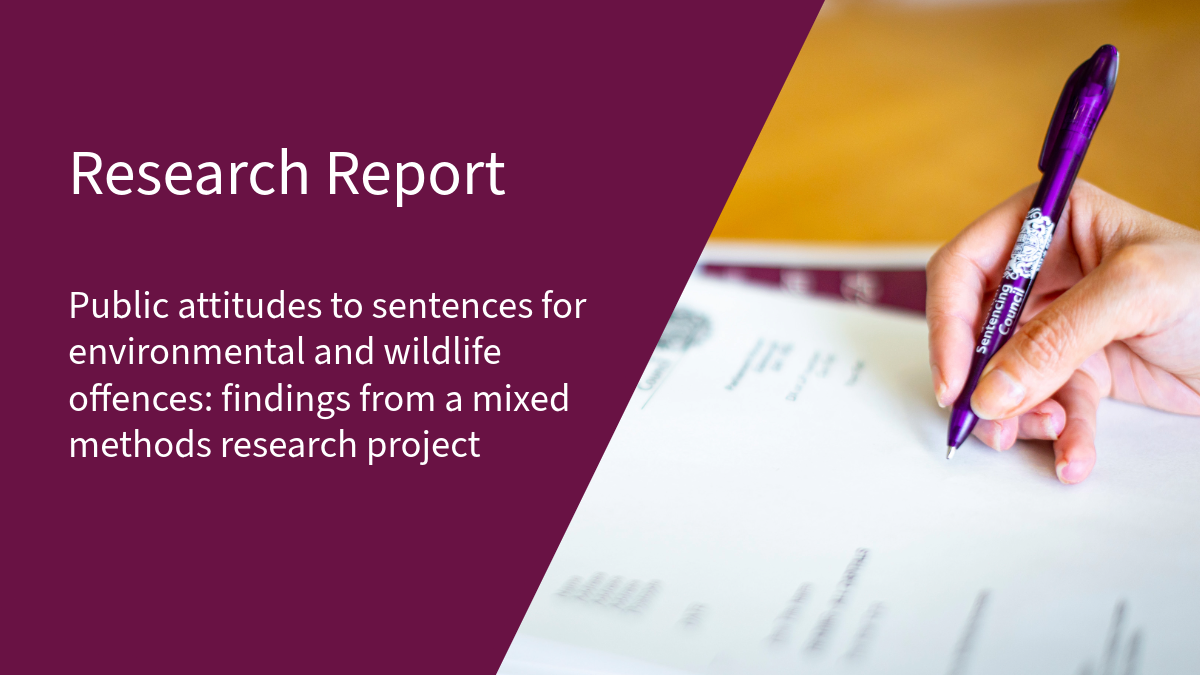
The Scottish Sentencing Council has published new research looking at public attitudes towards the sentencing of environmental and wildlife offences.
The research, Public Attitudes to Sentences for Environmental and Wildlife Offences: Findings from a mixed methods research project, was conducted in 2024 and includes findings from both an online survey and focus group discussions.
The research found that there was a clear difference in views on the severity of imposed sentences between survey respondents and focus group participants. While survey respondents largely believed that sentences for environmental and wildlife offences were too lenient, focus group participants expressed more mixed opinions, with some feeling sentences were too harsh, while others felt they were too lenient.
Participants from focus groups felt that sentencing for environmental and wildlife offences lacks transparency, though many also admitted to having limited knowledge of sentencing practices and outcomes for such offences. The research proposed that this lack of awareness may contribute to negative perceptions of its effectiveness.
Focus group discussions revealed a shared desire for a fair and effective sentencing framework that prioritises rehabilitation, environmental restoration, and crime prevention over purely punitive measures. They also suggested that corporations found guilty of these kinds of offences should bear greater responsibility, and breaches of duty of care should be treated as aggravating factors.
Improved communication with the public about the consequences of environmental and wildlife offences was seen as a possible deterrent, though some focus group participants believed offenders already understand the risks and choose to offend regardless.
Opinions on fines, a common disposal for environmental and wildlife offences, were divided. Some participants viewed fines as insufficiently punitive, particularly for corporate offenders, while others found them effective in certain contexts. There was strong agreement that it should never be cheaper to break the law than to adhere to it, and concerns were raised that corporations might pass the cost of fines onto consumers. Participants suggested that greater transparency around how fines are determined could help alleviate these concerns.
Sheriff Fleming, Council member and Chair of the Environmental and Wildlife Crime Committee, said of the research: “This is an important piece of research into the public’s attitudes towards sentencing of environmental and wildlife offences and will help inform the development of sentencing guidelines in this area. The findings will also inform how the Council seeks to improve public awareness of sentencing for these offences. The report is also relevant for many others who have an interest in such offences including not only those in the justice system but also statutory bodies and interested members of the public.”