

Rape sentencing guidelines approved by the High Court
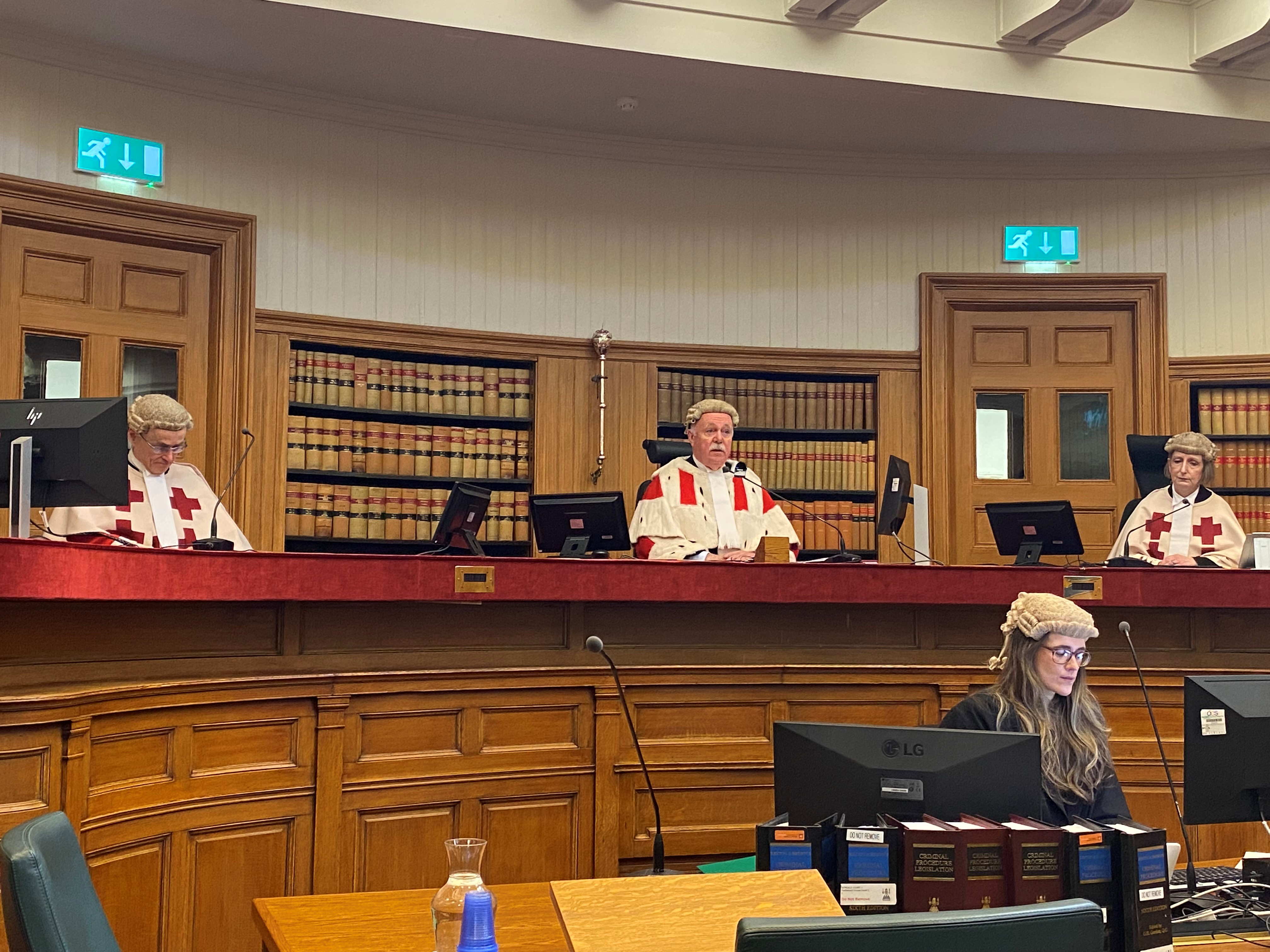
The Scottish Sentencing Council’s new sentencing guidelines on rape offences have been approved by the High Court.
The two new guidelines, which cover offences of rape and rape of a young child under the age of 13, were approved at a hearing of the High Court in Edinburgh on 3 December. They will come into effect on 3 March 2026.
The guidelines contain sentencing ranges to assist judges with selecting an appropriate sentence, with all options in the ranges set at long-term custodial sentences.
Approving the guidelines in the High Court, the Lord Justice General, Lord Pentland, said:
“The sentencing of rape offences is a highly sensitive and complex process and the Court very much welcomes both these guidelines as a means of enhancing consistency and predictability in sentencing. They will be of great assistance to sentencers and to all those involved in such cases, and will also serve as an important tool to enhance public awareness of sentencing of rape offences.
“The Scottish Sentencing Council is a body that is wholly independent of government. It has devoted much time, energy and thought to these guidelines and is to be commended for its work in developing them.”
The guidelines will help to enhance consistency in sentencing and improve awareness of how sentencing decisions are reached in rape cases.
The ranges in the guidelines are reflective of current sentencing practice as set out by recent decisions in the Appeal Court. In the rape sentencing guideline, the ranges reach up to 13 years’ imprisonment, while in the rape of a young child sentencing guideline, they reach up to 14 years’ imprisonment.
The options of extended sentences (a sentence where an offender is supervised in the community on release from custody) and Orders for Lifelong Restriction (a form of life sentence) are also included in the guidelines.
Chair of the Council, the Lord Justice Clerk, Lord Beckett, said:
“I welcome the High Court’s approval of the guidelines. These offences are among the most serious to come before the courts and are – quite rightly – of great concern to the public.
“We know that such offending can have a devastating impact on victims, and research tells us that they can experience a lack of information and understanding about sentencing.
“It is the hope of the Council that the guidelines will offer all involved in such cases a better understanding of the sentencing options available to the courts and the reasons behind sentencing decisions.
“The guidelines will also assist judges in determining appropriate sentences and promote consistency and predictability in sentencing.”
A public consultation on draft guidelines took place earlier this year. Having considered the consultation and the full range of evidence gathered during the development of the drafts, a number of changes were made to the final versions submitted to the Court – including an increase to some of the sentencing ranges in each guideline.
Other key changes included the removal of specific mitigating factors (which may lead to a less severe sentence). The guidelines instead refer users to the mitigating factors listed for all offences within the Council’s guideline on the sentencing process.
A further section addressing how non-harassment orders operate has been introduced, as well as a number of clarifications to help assist general understanding of certain features of seriousness. These include examples of an abuse of trust, and psychological harm and trauma.
The guidelines have been developed with an evidence-based approach, including wide-ranging engagement across the justice, government, and charity sectors. As part of the development process, the Council analysed relevant sentences imposed by the Scottish courts and commissioned research projects including a report exploring the views of victims.
The finalised guidelines are available to view here:
Rape of a young child sentencing guideline
The Council has published an impact assessment for each of the guidelines, which are available to view here:
Rape sentencing guideline - impact assessment
Rape of a young child sentencing guideline - impact assessment